Loading
Estate Pipes
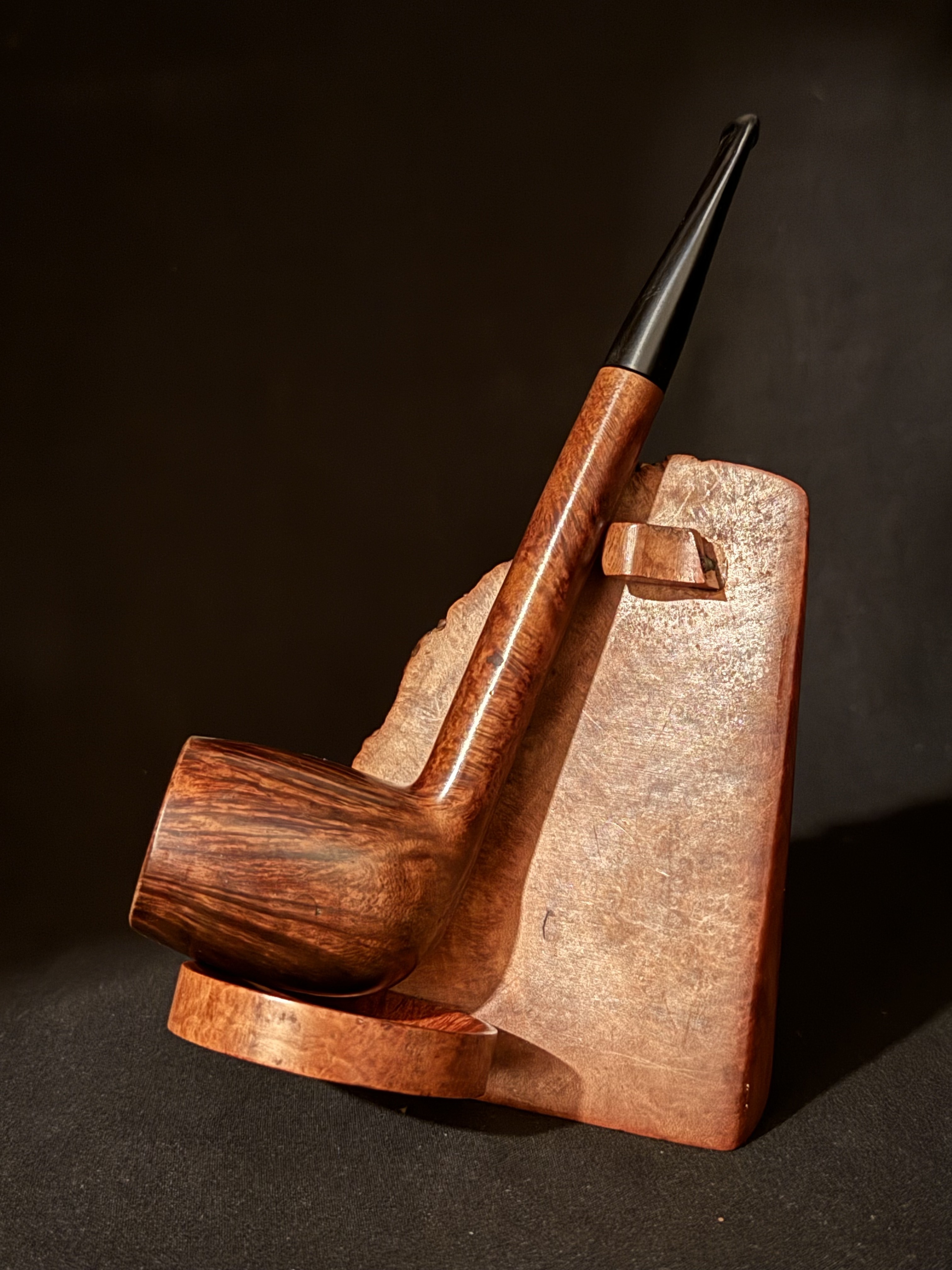
Steel's Pat. No. 8384 Smooth Canadian Briar Pipe, Vulcanite Stem, Estate
$95.00
Material
Briar
Availability
Sold
Tags
briar pipecanadian shapevulcanite stempatent pipesmooth finishestate pipefishtail mouthpiecevintage tobacco pipepipe collectingcarburetor systemtapered stempre-smokedcollectible pipes
This piece has been sold and is no longer available.
Carefully Packaged
Authenticity Guaranteed
Free shipping over $150
About this Piece
Welcome to Pipe Collectors Encyclopedia, your premier destination for museum-quality estate pipes with comprehensive historical and technical documentation.
IDENTIFICATION
Steel's Pat. No. 8384 is a smooth-finished Canadian briar pipe with a vulcanite tapered stem and fishtail mouthpiece. The patent number references a mechanical innovation-specifically a carburetor system with a cooling hole drilled through the bowl bottom. This pipe is pre-smoked and shows moderate use consistent with age.
HISTORICAL CONTEXT
Patented pipe designs carrying manufacturer patent numbers represent a class of engineering-focused pipemaking, where the maker invested in innovation rather than purely aesthetic refinement. The carburetor principle-a cooling or air-mixing system positioned at the bowl base-emerged in the mid-20th century as makers sought to address smoke temperature and draw characteristics. The hole bored through the bowl bottom and into the shank serves as an air intake or coolant passage, directing ambient air across or through the smoke stream before it reaches the stem. This was a practical response to smoker feedback about heat management in Canadian-form pipes, which by their geometry tend to concentrate heat in a compact bowl space.
Canadian shapes themselves trace to the early 20th century, when bent-shank designs with abbreviated bowls gained popularity among pipe smokers who valued portability and one-hand smoking. The smooth finish-achieved through careful sanding and hand-polishing of the briar surface-became the standard presentation for utilitarian pipes of this type, allowing the natural grain and color of the wood to speak for itself rather than competing with carved or sandblasted detail work.
The presence of a patent number on the pipe suggests production under license or by the patent holder during the patent period. Numbered patents on pipe bowls became less common after the mid-20th century, making any patent-marked pipe a window into a specific technological moment in pipemaking history.
GRADING & MARKS
Stamp observed: Steel's Pat no 8384. This nomenclature indicates the maker (Steel's) and a specific patented design (No. 8384). The patent number is the pipe's catalog identifier and the marker of its engineering feature-the carburetor hole system. No grade markings (A, B, C) or country-of-origin stamps have been noted.
SHAPE ANALYSIS
The bowl geometry measures 35 mm wide by 40 mm deep, with a 47 mm height from bottom to rim. This proportional relationship-a bowl that is approximately as deep as it is wide-defines the Canadian form: a compact, upright or slightly bent bowl with minimal overhang and a shank that moves directly from the bowl into a gentle or pronounced bend. At 152 mm overall length, this example is a moderate-sized Canadian, neither a vest-pocket nor a full-length design. The vulcanite tapered stem enters the shank without a filter housing, terminating in a fishtail mouthpiece that opens the bite area for comfort. The tapered design reduces stem mass toward the lip, a common choice for balanced feel in shorter pipes. The carburetor hole beneath the bowl is the defining technical feature: it introduces fresh air into the smoke path, intended to cool the draw and reduce harshness-a function that becomes apparent in the smoke characteristics once the pipe is in use.
BRIAR & FINISH
The bowl is fashioned from Mediterannean briar, the dense, fine-grained wood preferred for its stability and longevity. The smooth finish preserves the natural figure of the briar without artificial texture, allowing grain patterns and color saturation to emerge as the wood ages and oxidizes. Smooth finishes are achieved through progressive sanding with increasingly fine abrasives, followed by hand-polishing; the work is labor-intensive and demands skill to avoid flat spots or uneven sheen. The vulcanite stem is a hard-rubber compound-ebonite-which resists moisture and does not swell or shrink with humidity changes, a requirement for a precision-fitted mouthpiece. Over decades, vulcanite naturally oxidizes to a lighter gray or tan at the surface, though the material does not compromise functionally. The contrast between the warm brown of aged briar and the cool gray of oxidized vulcanite is characteristic of estate pipes of this era.
CONDITION REPORT
Overall condition: very good for age. The briar bowl exhibits faint scratches distributed around the exterior surface-consistent with decades of handling and light contact. A repair to the vulcanite mouthpiece addresses bite marks, indicating tooth chatter that was addressed, likely through re-facing or reaming of the affected area. A dark spot on the bowl exterior, localized to one side, does not penetrate the chamber interior; examination suggests external discoloration rather than internal char or burn. The chamber itself shows no damage or carbonization. The stem is intact with no cracks, breaks, or significant oxidation beyond the natural lightening of age. No fills, patches, or structural repairs to the bowl have been noted. The pipe is smoke-ready without cleaning or restoration.
DIMENSIONS
Length (overall): 152 mm / 6.1 inches
Bowl height: 47 mm / 1.9 inches
Bowl width: 35 mm / 1.4 inches
Bowl depth: 40 mm / 1.6 inches
Chamber diameter: 20 mm / 0.8 inches
Weight: 1.2 ounces
CLOSING
Ships from the Faridunhill / Pipe Collectors Encyclopedia archive. Worldwide shipping and professional sanitation on every estate pipe.
SKU: SKU-008