Loading
Estate Pipes
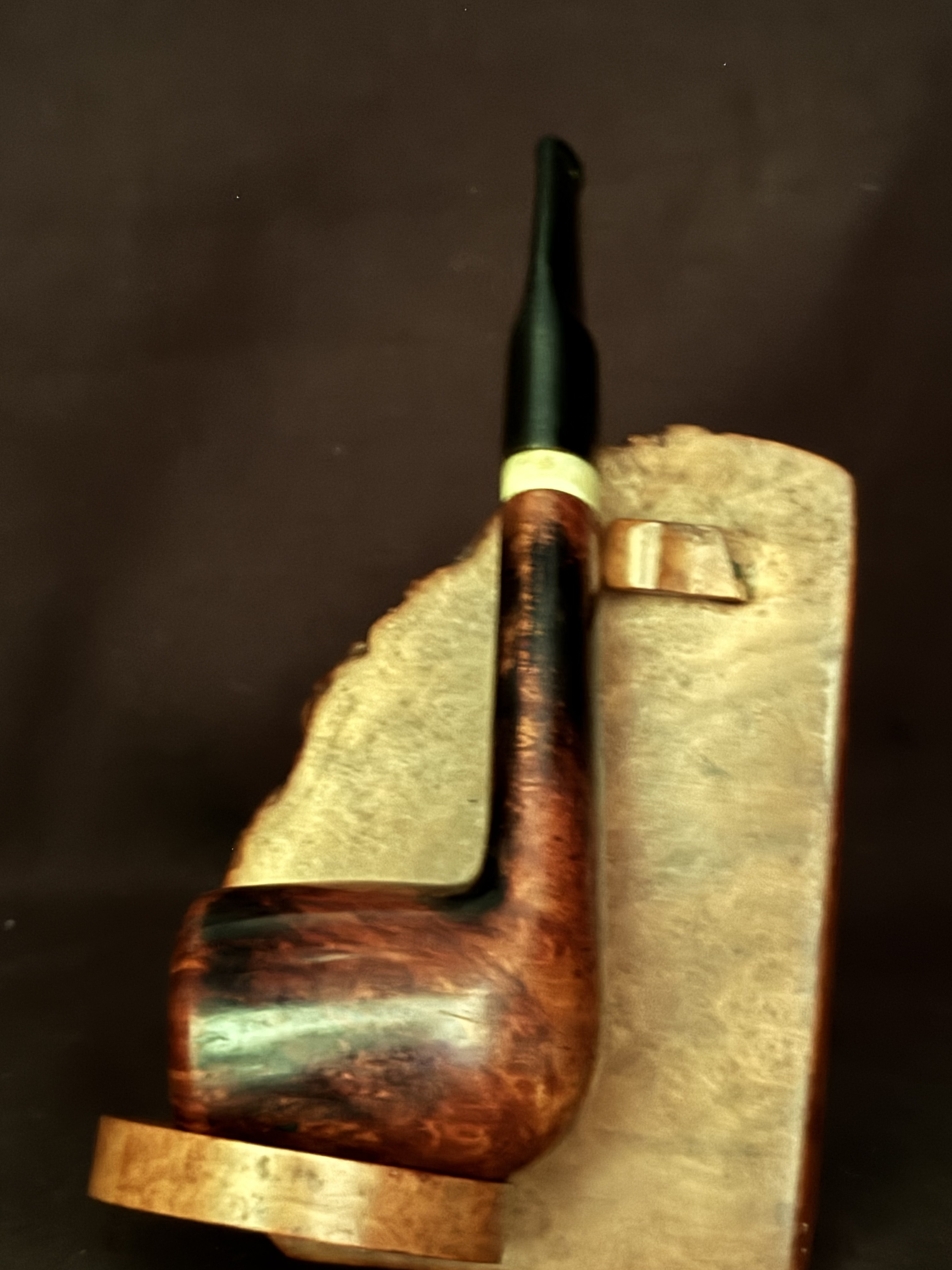
Rossi Noblesse 301150 Smooth Straight Acorn Estate Pipe
$39.00
Material
Briar
Availability
Sold
Tags
Rossi pipesItalian briarestate pipesacorn shapevintage smokingBarasso Italystraight pipesbriar woodpipe collectingsmooth finishtobacco pipeshand pipescollectible pipes
This piece has been sold and is no longer available.
Carefully Packaged
Authenticity Guaranteed
Free shipping over $150
About this Piece
Welcome to Pipe Collectors Encyclopedia, your premier destination for museum-quality estate pipes with comprehensive historical and technical documentation.
IDENTIFICATION
Rossi Noblesse, model 301150. Smooth straight acorn in brown briar with a white acrylic band at the shank. The finish is even and well-executed across the bowl. This is a standard production model from the Italian maker's later catalog period.
HISTORICAL CONTEXT
Rossi stands among the oldest and largest industrial pipe makers in Europe. Ferdinando Rossi, a Milanese tobacco wholesaler, founded the Fabbrica di Pipe di Radica Rossi in 1886 at Barasso, in the Varese region of northern Italy. The factory was remarkable for its infrastructure: Rossi built his own hydroelectric power station from a canal diversion to run the machinery. By the 1890s, Rossi pipes were being exported to Brazil and worldwide. When Ferdinando's son Leonida joined the firm around 1918, it became Fratelli Rossi Barasso (FRB). The interwar years saw Rossi at peak capacity: by 1936, at the firm's 50th anniversary, the factory employed 860 workers and produced more than 50,000 pipes daily-a claim that placed it among the world's largest pipe manufacturers of the era. Post-war, Rossi faced the combined pressures of the cigarette boom and the international rise of Danish and other European makers, particularly Castello, Brebbia, and Savinelli. The firm declined gradually and closed around 1985. Savinelli later revived the Rossi name as an affordable secondary line; the Achille Savinelli and Ferdinando Rossi families had been close associates. The Noblesse line, though not extensively documented in surviving catalogs, represents Rossi's mid-tier commercial output-well-made, smooth-finished, and designed for everyday smoking rather than collector showcase.
GRADES & MARKS
Stamp reading and interpretation: The model number 301150 is stamped on the shank. This numeric coding system was standard in later Rossi production (1970s-1985 period) and is the primary identifier for this pipe's catalog position. The maker's name "Rossi" appears on the stem, consistent with the firm's late-production marking practice. No date stamp is present; Rossi did not routinely date-stamp pipes by model number.
Grade indicators: The pipe carries no grade designation (such as "Extra" or "Super"), indicating it is a standard commercial grade-competently finished but not from a premium line.
Country of origin: "Italy" or "Made in Italy" would typically appear on pipes of this era, though stamping clarity varies with wear.
METHOD & SIGNIFICANCE: Model numbers allow researchers to cross-reference original Rossi catalogs and production records held in the Paronelli museum collection (Gavirate, Italy) and the Giovanni Carollo archive (Molina di Barasso). This specific code 301150 places the pipe within Rossi's documented output but does not yet map to a named model in publicly available catalogs.
SHAPE ANALYSIS
The acorn is a compact, squat bowl form with a wide rim and minimal height relative to its diameter. This geometry concentrates heat and delivers a warm, moist smoke well-suited to aromatic tobacco. The straight shank keeps the pipe light in the mouth and easy to clench. Acorns are utilitarian shapes, favored for estate and workaday pipes rather than display pieces. The 130 mm overall length situates this pipe in the standard hand-pipe range-not a pocket pipe, not an oversized bent. The white acrylic band at the shank-bowl junction serves both functional (it reinforces the joint and protects the briar at a stress point) and aesthetic purposes: the band creates visual balance against the brown briar and provides a grip surface. The shank diameter of 20 mm is typical for straight pipes of this size and period.
BRIAR & FINISH
The bowl is cut from briar burls-the dense, knotty wood prized for pipe-making since the mid-1800s. The grain visible on the exterior is a natural feature of the burl, and Rossi's finishing technique involved light sanding and application of a clear lacquer or wax to reveal the wood's depth. A smooth finish (as opposed to sandblast or rusticated) demands high-quality wood and precise surface preparation; any grain defect, soft spot, or fill becomes immediately visible. The finish here is described as very nice, indicating the original artisan took care with the wood selection and sanding progression. Under raking light, a smooth briar finish shows the wood's natural color variation, the depth of the burl structure, and the uniformity of the lacquer layer. This finish style was the default for Rossi's commercial pipes and remains popular among smokers who prefer a tactile, warm aesthetic over heavily textured alternatives.
CONDITION REPORT
The bowl and external briar are in good order. The white acrylic band at the shank exhibits a break and misalignment-the band has fractured, and the pieces are not flush with the shank or each other. This is structural damage and affects the appearance significantly, though it does not prevent the pipe from smoking. The band could be repaired by a professional restorer (re-gluing or replacement), but the current state must be factored into valuation and intended use. The mouthpiece is intact. The internal chamber has not been examined for cake build-up or char; photographs alone cannot establish internal condition. No tooth marks, rim burns, or deep gouges are evident on the visible surfaces. The stem shows surface wear consistent with use but no major cracks or tooth damage.
DIMENSIONS
Length overall: 130 mm (5.2 inches)
Bowl height: 47 mm (1.9 inches)
Bowl width (diameter): 37 mm (1.5 inches)
Bowl depth: 40 mm (1.6 inches)
Chamber diameter (internal): 20 mm (0.8 inches)
Weight: 1.5 ounces (approximately 42 grams)
CLOSING
Ships from the Faridunhill / Pipe Collectors Encyclopedia archive. Worldwide shipping and professional sanitation on every estate pipe.
SKU: SKU-249