Loading
Estate Pipes
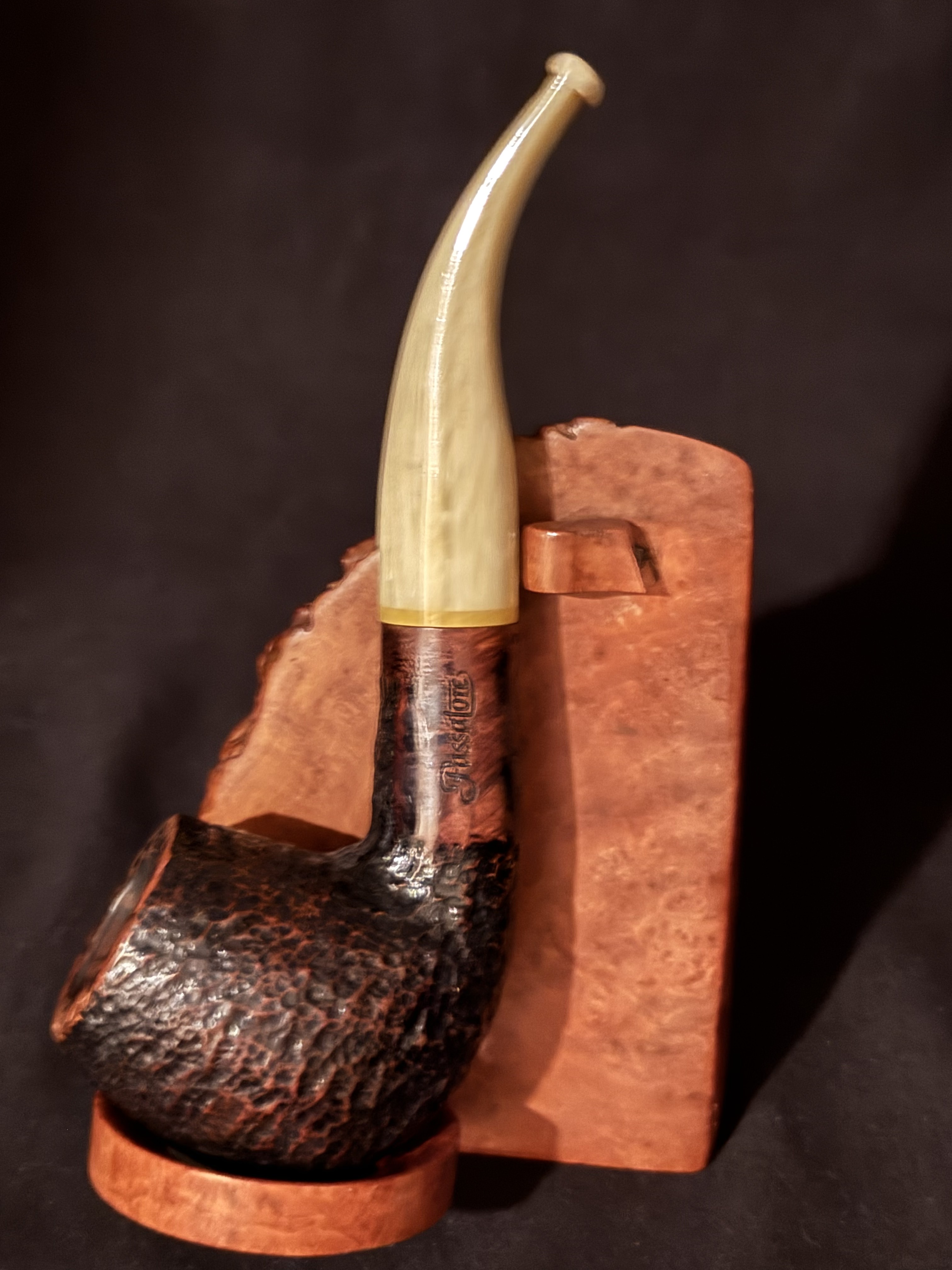
Passator Bent Apple Sandblast Italian Briar Estate Pipe 9mm Filter
$79.00
Material
Briar
Availability
Sold
Tags
Passator pipeItalian briarbent applesandblast finish9mm filterestate pipevintage smokingacrylic stempipe collectorEuropean briarartisan pipepipe smokingtobacco pipe
This piece has been sold and is no longer available.
Carefully Packaged
Authenticity Guaranteed
Free shipping over $150
About this Piece
Welcome to Pipe Collectors Encyclopedia, your premier destination for museum-quality estate pipes with comprehensive historical and technical documentation.
IDENTIFICATION
This is an Italian Passator bent apple in sandblast finish, fitted with a beige acrylic tapered stem and 9mm filter system. The pipe measures 145mm (5.8 inches) in overall length and weighs 2 ounces. Passator is a smaller Italian maker known for competent artisanal work and reliable filter-system engineering. This example represents the maker's standard production aesthetic: direct, functional shapes finished in the sandblast technique that became ubiquitous in Italian estate pipecraft from the 1990s onward.
HISTORICAL CONTEXT
Passator operates within the broader tradition of northern Italian pipemaking, a region that expanded significantly after the 1980s as Danish and English makers' output contracted and production shifted eastward and southward. Italian makers, particularly those based in the Po Valley and Veneto regions, capitalized on lower labor costs and established briar-sourcing networks to produce high-volume, reliable pipes for the international estate and bulk market. Unlike prestigious Italian names such as Savinelli or Mastro De Paja, which built reputations on hand-finishing and design innovation, Passator positioned itself as a pragmatic producer of well-executed standard shapes. The bent apple was already centuries old in European pipemaking by the time Passator adopted it: the form traces to Victorian bent-stem engineering and reached its modern standardization in 20th-century Danish and Italian catalogs. Sandblasting as a finish technique became widespread in the 1970s and 1980s, offering makers a way to mask grain irregularities, tool marks, and production variations while creating visual texture and perceived value-add. For collectors, Italian estate Passator pipes occupy a pragmatic niche: they are neither collectible rarities nor beginner pipes, but rather reliable smokers that often command modest prices at estate sales and online markets. This bent apple, having passed through an estate, now carries the patina of actual use-a quality that distinguishes it from new production and makes it suitable for the collector seeking a functional European briar from the modern era.
GRADING & MARKS
Stamps and markings: to be confirmed upon inspection. The seller's note references Passator as the maker; all identifying stamps are to be verified during detailed examination. Italian maker stamps typically appear on the shank underside or sidewall and often include the maker name, country of origin marking (ITALY), and sometimes a shape designator or grade indicator. Specific stamp clarity, legibility, and format are to be confirmed upon inspection.
SHAPE ANALYSIS
This pipe is a bent apple with forward-angled bowl and tapered acrylic stem. The apple shape is one of the oldest and most stable forms in European pipemaking, characterized by a rounded or slightly flattened bowl sitting upright on a relatively short shank and bent stem. The apple's bowl geometry-width 41mm (1.7 inches), depth 40mm (1.6 inches), height 49mm (2.0 inches)-yields a compact chamber suited to shorter smoke sessions and direct draws. The tapered stem is a practical choice that reduces weight at the mouthpiece and accommodates the 9mm filter tenon standard. Bent apples are held gently in the hand or rested on the pipe rest; the forward-set bowl balances the stem weight. This geometry has remained virtually unchanged since the Victorian era and remains popular in both artisanal and production settings because it combines visual interest with straightforward ergonomics.
BRIAR & FINISH
The bowl is briar with a sandblast finish. Sandblasting is achieved by abrasive media-typically walnut shell or silica-projected at high pressure against the briar surface to create texture and remove the outer skin (which often contains burn marks, grain cracks, or tool impressions from drilling). The result is a matte, tactile surface with visible grain character revealed beneath the worn outer layer. Under raking light, a well-executed sandblast shows consistent texture and even grain visibility without deep pitting or residual tool marks. The beige acrylic stem is a common choice in mid-range Italian production: acrylic is durable, allows for thread-in filter systems, and resists oxidation and tooth chatter. Acrylic stems do yellow slightly with age and UV exposure, but this is a cosmetic change, not a structural flaw. The sandblast finish pairs effectively with the bent apple form because it softens the visual weight of the compact bowl and gives the eye a place to rest on what might otherwise read as a squat shape.
CONDITION REPORT
Overall Grade: Very Good. The seller's note indicates very good condition with expected tiny darkness on the rim and minor scratches on the mouthpiece. Rim: minimal darkening visible, consistent with light use and age. Chamber: to be confirmed upon inspection. Stem: minor surface scratches present on the acrylic; no cracks or deep gouges noted. Briar body: intact; no fills, cracks, or major repairs noted. Oxidation and finish: to be confirmed upon inspection. This is a lived-in pipe showing appropriate wear for an estate example without structural compromise or restoration work.
DIMENSIONS
Length (overall): 145mm / 5.8 inches
Bowl height: 49mm / 2.0 inches
Bowl width: 41mm / 1.7 inches
Bowl depth: 40mm / 1.6 inches
Weight: 2 ounces / ~57 grams
9mm filter system (standard tenon)
CLOSING
Ships from the Faridunhill / Pipe Collectors Encyclopedia archive. Worldwide shipping and professional sanitation on every estate pipe.
SKU: 251