Loading
Estate Pipes
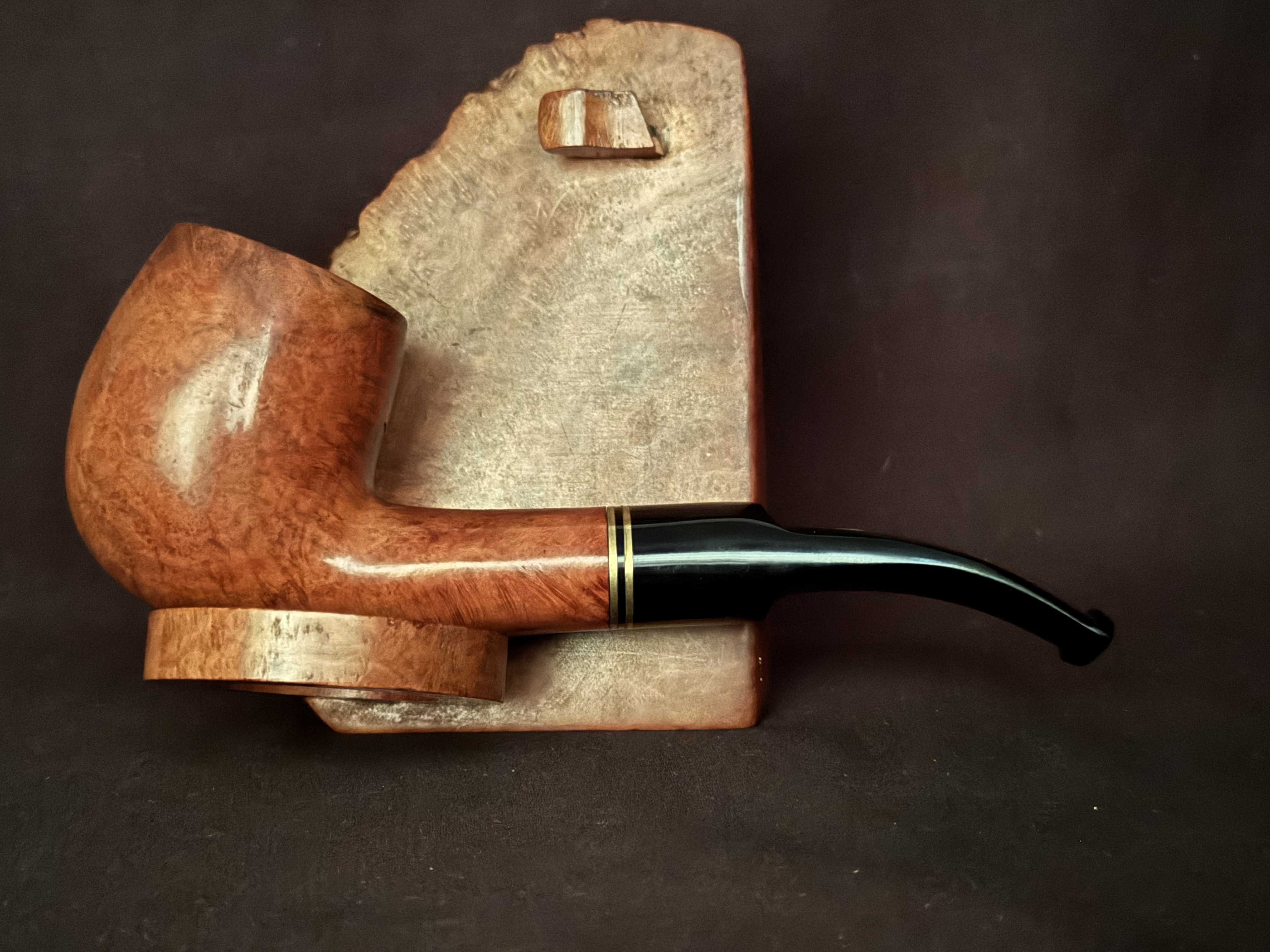
Lorenzo Smooth Bent Billiard Oval Shank 9mm Filter Estate Pipe
$95.00
Material
Briar
Availability
Sold
Tags
Lorenzo PipesItalian briar pipebent billiardestate pipe9mm filtervintage smokingGallarateacrylic stemsmooth finishcollector pipepre-smokedworking pipecurved stem
This piece has been sold and is no longer available.
Carefully Packaged
Authenticity Guaranteed
Free shipping over $150
About this Piece
Welcome to Pipe Collectors Encyclopedia, your premier destination for museum-quality estate pipes with comprehensive historical and technical documentation.
IDENTIFICATION
This is a Lorenzo bent billiard with oval shank, finished in smooth briar. The pipe carries a 9mm filter system and acrylic saddle stem with fishtail mouthpiece. Lorenzo Pipes of Gallarate, Italy produced this model as part of their core catalog of thick-walled, working-class briars that became student and tradesman icons from the 1970s onward.
HISTORICAL CONTEXT
Lorenzo Pipes traces its lineage to Fratelli Lana, founded in Gallarate, Varese, Italy in 1900 as one of the third generation of northern Italian pipe makers-after Rossi (1886) and Ceresa (1897). The Lana operation grew steadily, entering a co-operative arrangement with Tagliabue, the Milan merchants, in 1922; by 1939 the combined workshop employed 120 workers and supplied budget-grade briars across Europe, many stamped only with the generic marking "Genuine Bruyere."
In 1946, Tagliabue assumed full ownership of the operation, which became Manufattura di Pipe Tagliabue. Around 1950, Lorenzo Tagliabue, the proprietor's son, took direct management and began a strategic upmarket repositioning. Having studied the construction methods of Castello and Brebbia-Italy's prestige makers-he developed Lorenzo's own house style: thick-walled bowls with flat-sitting bottoms, generous putty fills where needed, and a deliberately matte finish in bold red and orange stains. In 1969 the brand was officially renamed Lorenzo Pipes to distinguish it from other Tagliabue enterprises.
The 1970s and 1980s became the cult decade for Lorenzo. The pipes were marketed explicitly to working men and students-heavy, durable, unadorned briars designed for serious smoking, not display. The thick walls, the flat bottom that allowed the pipe to rest upright on a table, and the visible putty repairs (which collectors now read as honest engineering) became signatures of the house. The brand also fielded Spitfire, a budget sister line offering 1:1 models in smaller gauges and simpler finishes, plus Lloyd's as a secondary label. This was the golden age of Lorenzo's reputation among European blue-collar and academic smokers.
In 1983, Lorenzo Tagliabue retired following the death of his daughter; he died in 1987. The brand briefly licensed to Comoy's of London (Cadogan/Oppenheimer interests) and nearly vanished. In 1988, Riccardo Aliverti and his partner Gabriella acquired all rights and resumed production. The Aliverti family brought deep technical lineage to the role-Romolo Aliverti had joined Fratelli Lana in 1920 as technical director; Riccardo entered the business in 1954 and became technical director in 1973. Under Aliverti stewardship, Lorenzo resumed output of Italian-made lines (One Star, Two Star, Three Star, Moscato, Spumante, Grand Canadian) alongside cheaper Albanian-made models sourced from Tomori. The brand continues to this day, but the pre-1983 Tagliabue-era pipes remain the most collected and sought by those who value the purposeful engineering and visual character of the original design ethos.
GRADING & MARKS
The pipe is stamped Lorenzo and carries the standard marking convention of the Tagliabue-era production (1950-1983). No specific shape number is recorded in the submission notes. The 9mm filter chamber is original to the design-a deliberate feature of post-1950 Lorenzo models that allowed smokers to pair the pipe with modern filtered tobacco or standard charcoal filters, increasing the pipe's utility in an era when filtered smoking was becoming standard in Europe.
SHAPE ANALYSIS
The bent billiard with oval shank is a working-class workhorse geometry. The billiard bowl-cylindrical, compact, flat-bottomed-sits at a comfortable angle when the pipe rests on a table or desk, and the bent configuration allows the smoker to clench it in the teeth without tilting the head. The oval shank, narrower in cross-section than a round shank, reduces weight at the balance point and was a deliberate choice on budget-grade pipes where material savings mattered without sacrificing feel. The acrylic saddle stem with fishtail mouthpiece is a period-correct marriage: the saddle (a reinforcing band at the stem-bowl junction) adds structural durability to a plastic stem that might otherwise flex under stress, while the fishtail opening provides a comfortable lip contact and allows faster draw. This is honest, functional design-no pretense, every element serving smoking comfort and durability.
BRIAR & FINISH
The smooth finish indicates a briar blank that has been sanded to a uniform polished surface, requiring a grain-free or tight-grained blank-or one carefully finished to hide grain figure. The smooth treatment was typical of Lorenzo's working-pipe aesthetic: easy to clean, resistant to casual wear, and visually neutral so that the pipe's character came from its proportions and engineering, not from display grain. The pre-smoked patina visible in the submission (described as faint staining with a darker rim) indicates years of use and oxidation of the briar surface. This is genuine aging-the wood has absorbed smoke, absorbing tars and resins that darken the rim first (where heat is greatest) and gradually migrate inward. A collector reading this finish sees a pipe that has been smoked, rested, and cared for; the finish is no longer pristine, but it is not damaged.
CONDITION REPORT
Overall grade: Very Good. Rim darkening is present, consistent with age and use; no chip or crack noted at the rim edge. Bowl interior not yet graded-refer to photographs. The exterior briar carries a faint scratch described in submission notes as "orotund the briar" (likely periosteal/surface); no deep gouges, cracks, or separations reported. The stem is acrylic saddle construction, the most durable plastic stem type; no tooth chatter or delamination noted. No repairs, fills, or internal damage reported in the submission. The chamber and filter system are original and intact. This pipe shows honest wear consistent with estate use, without structural compromise.
DIMENSIONS
Length: 140 mm (5.6 inches)
Bowl Height: 50 mm (2.0 inches)
Bowl Width: 40 mm (1.6 inches)
Bowl Depth: 40 mm (1.6 inches)
Chamber Diameter: 20 mm (0.8 inches)
Weight: 2.1 oz (approximately 60 grams)
Filter Gauge: 9 mm
Ships from the Faridunhill / Pipe Collectors Encyclopedia archive. Worldwide shipping and professional sanitation on every estate pipe.