Loading
Estate Pipes
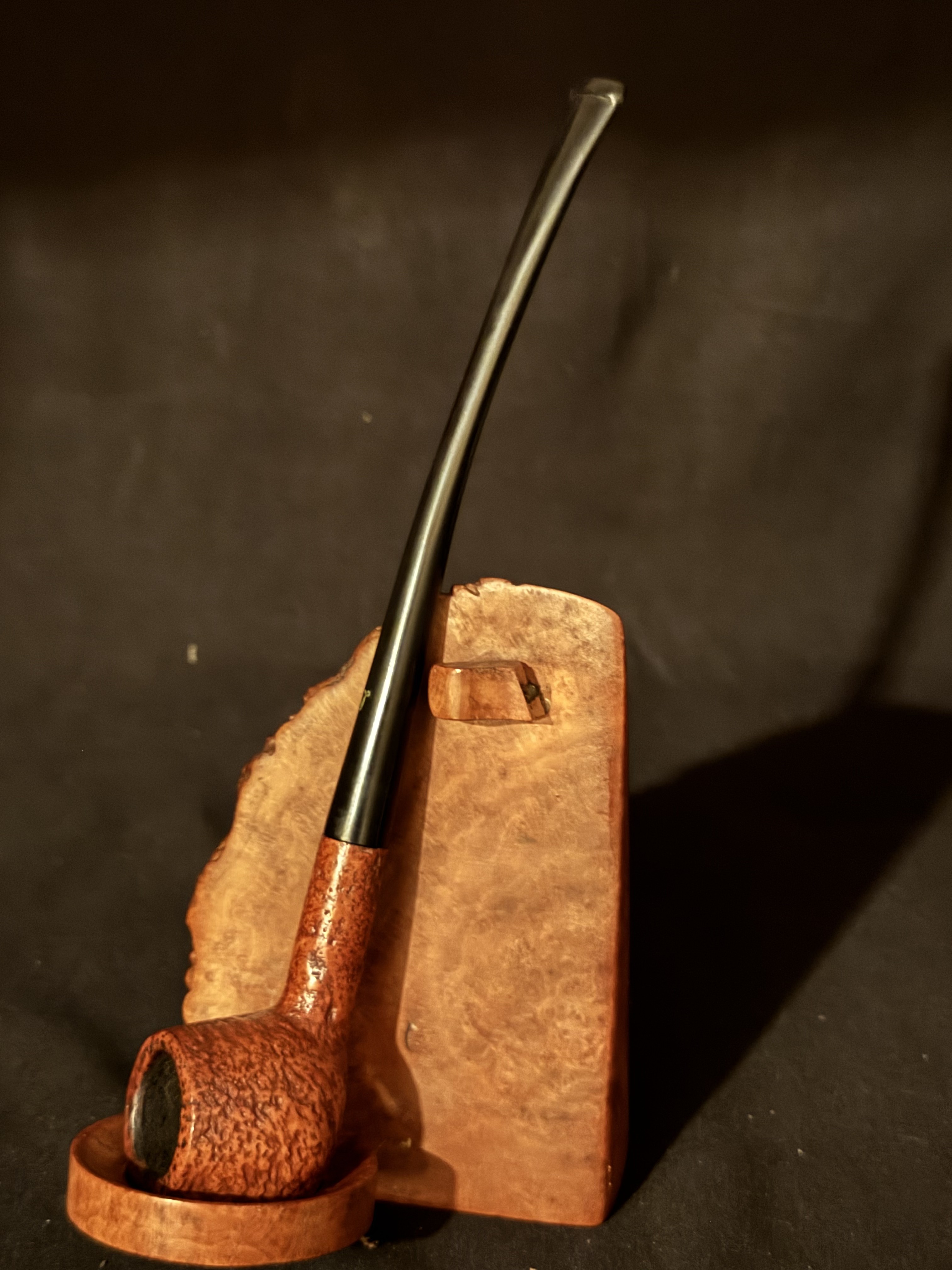
Italian Estate Lorenzo LULU Mini Sandblast Apple Churchwarden Long Stem Pipe
$89.00
Material
Briar
Availability
Sold
Tags
Italian pipeLorenzo LULUchurchwardensandblast finishvulcanite stemapple shapeestate pipebriar pipesmoking pipecollector pipeartisan pipevintage estatemini apple
This piece has been sold and is no longer available.
Carefully Packaged
Authenticity Guaranteed
Free shipping over $150
About this Piece
Welcome to Pipe Collectors Encyclopedia, your premier destination for museum-quality estate pipes with comprehensive historical and technical documentation.
IDENTIFICATION
This is an Italian estate pipe by Lorenzo LULU, model 81530, a mini sandblast apple-form churchwarden with a long vulcanite stem and fishtail mouthpiece. The pipe carries no filter accommodation. Marked as pre-used in very good condition with no reported issues, this is a working collector's piece from the Italian artisanal tradition.
HISTORICAL CONTEXT
Lorenzo LULU represents a category of Italian pipe manufacture that emerged and flourished in the mid-to-late twentieth century, when Italian craftsmen began carving a distinct identity in the European briar market. Italian pipes have traditionally occupied a middle ground between the precision-engineered Scandinavian aesthetic and the more rustic European regional styles. The sandblast finish-where briar is exposed to abrasive jet treatment to reveal grain and create texture-became a signature technique in Italian production, particularly favored for showcasing the dramatic grain patterns in Mediterranean briar sourced from Calabria and other southern Italian regions.
The churchwarden form itself traces to seventeenth-century European ecclesiastical tradition, where long-stemmed pipes were smoked in church gathering spaces. By the twentieth century, the churchwarden had become a standard catalog shape across most established makers, valued for its distinctive visual presence and the way the extended stem positions the bowl away from the smoker's face. Italian makers adopted the form with particular enthusiasm, recognizing its appeal to both traditional smokers and collectors drawn to the silhouette's dramatic line.
The apple shape-a rounded, bulbous bowl with modest height-is a foundational form in pipe design, appearing in catalogs from virtually every significant maker. Its appeal lies in its economy of briar, its aesthetic balance, and its versatility across multiple stem lengths. A mini apple, as here, compresses these proportions further, yielding a lighter, more portable package while retaining the shape's visual identity. The sandblast finish on a mini apple creates concentrated visual interest across a compact surface, making every grain pattern significant to the overall presentation.
Model 81530 places this pipe in the Lorenzo LULU catalog as a cataloged design rather than a one-off commission, suggesting it was part of a numbered range intended for consistent production and retail distribution. Italian makers have long numbered their shapes for internal and dealer reference, though comprehensive catalogs for all Italian makers remain incomplete in English-language collecting literature.
COLLECTORS' INTEREST
Italian estate pipes attract collectors for several reasons: the quality of Calabrian briar often rivals northern European sources, the sandblast technique showcases grain with particular drama, and the design philosophy tends toward generous bowl size and practical smoking dimensions. Estate examples from makers like Lorenzo LULU offer the advantage of proven durability and the historical marker of having been selected and used by previous owners, validating the maker's output through time.
GRADING & MARKS
The pipe is marked "Lorenzo LULU" on the shank. The model number "81530" indicates this is a cataloged shape, not a custom or limited production item. No filter accommodation is present, meaning the chamber connects directly to the stem without a baffle or 9mm tube insert. The stem is vulcanite, the traditional hard-rubber compound used in pipe manufacture from the late nineteenth century onward; vulcanite darkens with age and exposure to light, a normal and expected patina. The mouthpiece is fishtail form, a terminal design that splits the vulcanite stem into a gentle fork, increasing the surface area in contact with the lips and providing a comfortable smoking posture.
No other stampings, dots, or grade indicators are reported.
SHAPE ANALYSIS
This is a mini apple churchwarden: a short, rounded bowl seated on a long, slender shank that extends well below the hand. The long stem places the bowl at a distance from the face, a positioning that appeals to smokers who prefer smoke travel and cooling time before inhalation, and to collectors who appreciate the visual drama of the extended silhouette. The apple form provides a compact bowl footprint with satisfying visual mass when the stem is proportioned to complement rather than dominate; here, the mini dimensions keep the overall profile lean and elegant.
The churchwarden geometry-bowl elevated, stem dropping straight or in gentle curves-has remained stable across all makers and eras because the form solves functional problems durably: the long stem naturally separates heat source from hand, the tall bowl entrance accommodates multiple packing depths, and the visual line created by the stem length reads clearly across a room or in a pipe rack. Italian makers have historically favored slightly heavier, more sculptural bowl forms than their Danish counterparts, and the sandblast surface-with its rough texture and light-catching grain-suits this approach by adding visual substance without adding weight.
BRIAR & FINISH
Sandblast is a mechanical finish applied by subjecting the briar surface to a jet of abrasive particles (typically sand or crushed walnut shell) at high pressure. This removes the outer skin of briar and exposes the grain structure in relief, creating a textured surface with peaks and valleys. On well-selected briar, sandblast is a dramatic and lasting finish: the grain patterns become permanent visual features rather than superficial stain or paint, and the rough texture hides fingerprints and minor handling marks better than smooth finishes do.
The quality of the sandblast result depends on several factors: the character of the grain itself (some briar has fine, tight grain that yields modest visual relief, while other pieces display coarse, wild grain patterns), the depth and angle of the blast treatment, and the color of the briar under the surface. Italian briar from Calabria often displays warm, golden undertones in the grain, contrasting with the darker surface layer removed by sandblasting. On a mini apple like this one, the concentrated grain patterns visible across the compact bowl surface can be remarkably intricate-each piece unique in its final appearance.
Finish durability is excellent: sandblast surfaces do not chip, flake, or require refinishing under normal smoking use. Over decades, the peaks of the sandblast may lighten or the surface may accumulate a faint patina, but the texture and pattern remain stable. Collectors often prefer sandblast finishes for this reason-the pipe improves with age rather than deteriorating.
CONDITION REPORT
Condition: Pre-used in very good condition, no issues reported. The pipe shows no structural damage, cracks, or repairs. The rim is intact. The chamber is open and patent. The vulcanite stem displays normal age patina (expected darkening from oxidation and light exposure). No tooth chatter, no major fills, no previous major restoration.
DIMENSIONS
- Overall length (stem to bowl end): 185 mm / 7.6 inches
- Bowl height: 30 mm / 1.2 inches
- Bowl width: 32 mm / 1.3 inches
- Bowl depth: 45 mm / 1.8 inches
- Chamber diameter: 17 mm / 0.7 inches
- Weight: 0.7 ounces / approximately 20 grams
- Stem type: Long vulcanite, fishtail mouthpiece, no filter
CLOSING
Ships from the Faridunhill / Pipe Collectors Encyclopedia archive. Worldwide shipping and professional sanitation on every estate pipe.
SKU: sku-185