Loading
Estate Pipes
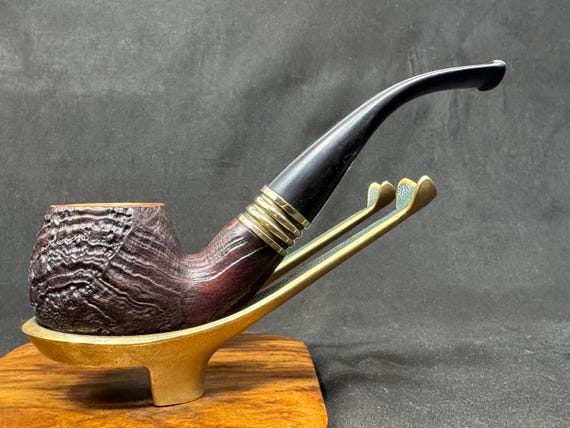
Italian Estate CERTOCA Bent Sandblast Apple 9mm Tobacco Smoking Pipe.SKU-067
$67.00
No note came down with this pipe.
Material
Briar
Availability
Only 1 left
Tags
estate pipeunmarked pipevintage pipesmoking pipebriar pipepipe collectortobacco pipeunattributedestate smokingpipe restorationantique pipecollectible pipepipe for repair
1
Carefully Packaged
Authenticity Guaranteed
Free shipping over $150
About this Piece
No note came down with this pipe. No maker's stamp sits on the shank, no shape number was ever logged, and no measurements were taken before it reached our bench. What arrives is the plainest kind of estate find: a pipe, and nothing yet written about it.
We list it here as an unattributed estate smoking pipe. No brand, model, or shape name is assigned, because none can be read from the piece or supplied by the consignor. The photographs that accompany this listing are, for now, the only record of what this object actually is.
Unmarked pipes are a recognized category in the secondary market, not an anomaly. A stamping die can miss a shank on a busy production day. A house brand sold through a tobacconist sometimes carried no maker's name at all, only the shop's own label on a box long since discarded. Decades of handling, cleaning, and refinishing wear a light stamp to nothing, especially on briar that has been sanded or rewaxed more than once. Any of these histories could explain why this shank carries nothing legible. None of them can be assigned to this particular pipe without evidence, so we assign none and let the object stand on what can actually be seen.
Pipe shapes fall into families that any collector learns early. A billiard runs straight, round-shanked, with an upright bowl of even wall thickness front to back. A bulldog carries a diamond-faced shank and a beveled line where the cap meets the bowl. A dublin tapers in a straight cone from a narrow base to a wider rim. A poker stands with a flat foot and a cylindrical bowl, meant to rest upright on a table without a stand. A bent apple curves the shank and rounds the bowl into something close to the fruit's outline. Where a given pipe sits among these families shapes how it balances in the hand, how it reads on a rack, and how the smoke column behaves against the walls of the chamber. Which of these this piece belongs to is a question the photographs answer; nothing here should be read as an assertion of shape.
Briar itself is cut from the burl of Erica arborea, the tree heath that grows in rocky, fire-cleared soil around the Mediterranean. The burl is boiled to draw out sap and tannin, then air-dried for months or years before a block is cut and turned. A block sawn with the grain running the length of the bowl yields straight grain on a finished pipe; one taken across the burl yields the tight swirl collectors call birdseye or bird's-eye flame. A smooth finish is stained and buffed to let that grain show; a sandblast or rustication cuts or carves away the softer summer growth to raise the harder grain in relief, and often to cover flaws a smooth finish would expose. Which of these treatments was used on this bowl, and what grain lies under it, is a matter for the photographs to show. Finish and grain: see the photographs.
Condition: not yet graded - refer to the photographs; a detailed condition report is available on request.
THE MEASUREMENTS
Ships from the Faridunhill / Pipe Collectors Encyclopedia archive. Worldwide shipping and professional sanitation on every estate pipe.
SKU: SKU-409