Loading
Estate Pipes
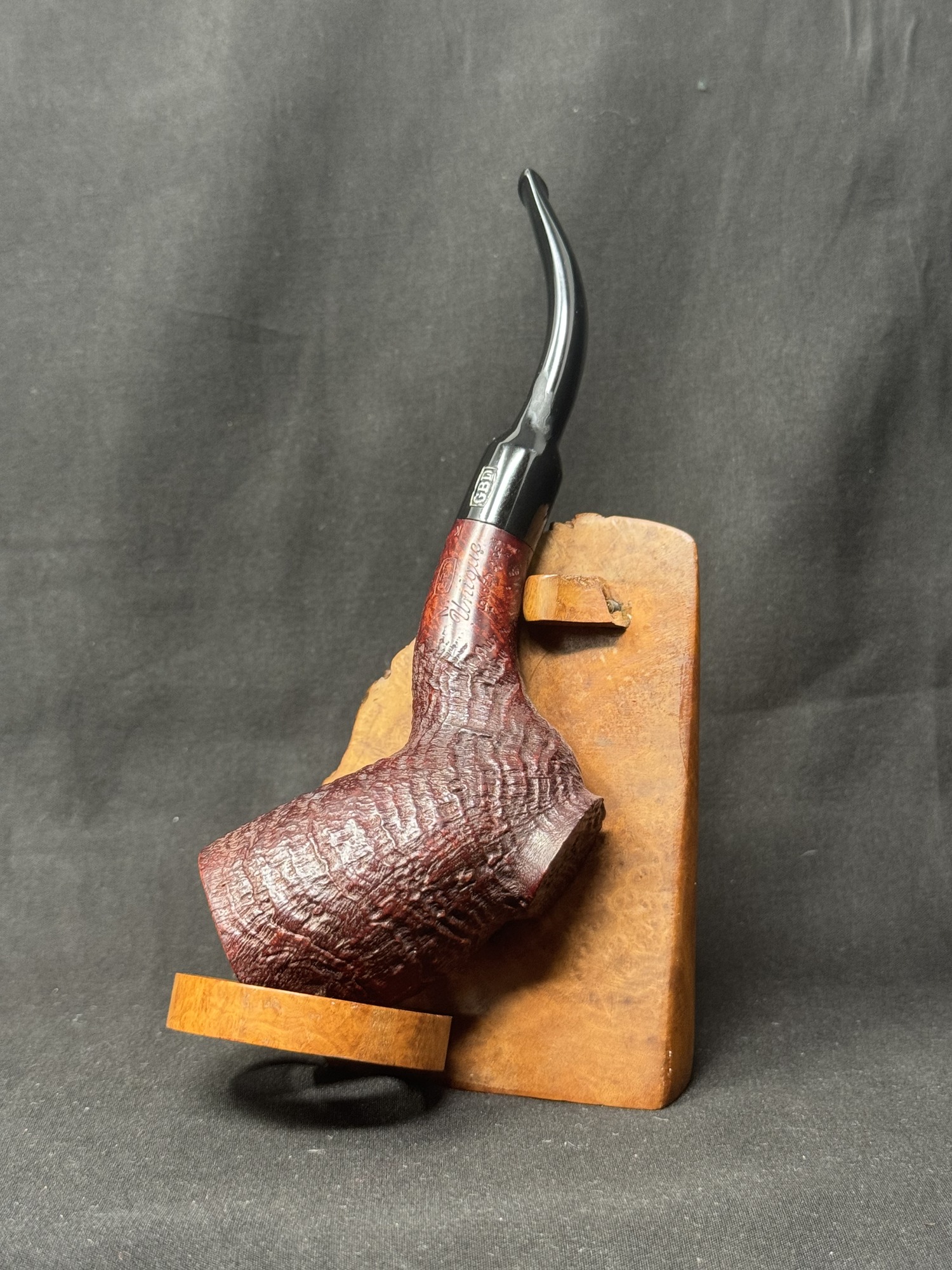
GBD Unique Sandblast Cutty Estate Pipe - Vintage Smoking Tobacco Pipe
$145.00
Welcome to Pipe Collectors Encyclopedia, your premier destination for museum-quality estate pipes with comprehensive historical and technical documentation.
Material
Briar
Availability
Sold
Tags
GBD pipesandblast finishcutty pipeestate pipevintage tobaccobriar pipeFrench pipesG.B.D.mid-century pipecollector pipesmoking pipespipe smokinggift for smoker
This piece has been sold and is no longer available.
Carefully Packaged
Authenticity Guaranteed
Free shipping over $150
About this Piece
Welcome to Pipe Collectors Encyclopedia, your premier destination for museum-quality estate pipes with comprehensive historical and technical documentation.
IDENTIFICATION
This is a GBD Unique sandblast cutty, a compact bent pipe from the London maker's mid-century production run. GBD Unique represents the middle tier of the GBD catalog-refined enough for daily use, distinctive enough to hold a place in a working collection. The sandblast finish, with its characteristic etched texture across the briar surface, marks this as a deliberate design choice rather than a defect cover-up; GBD sandblasts were marketed as durable and masculine. The cutty shape-a short, squat bowl on a stub shank-places this pipe in the practical British tradition, sized for quick smokes and straight pocket carry.
HISTORICAL CONTEXT
GBD was founded in 1850 in London by Ganneval, Bondier, and Donninger. The house built its reputation on consistent, unpretentious briar work and pragmatic shapes that suited the working smoker as well as the gentleman. By the twentieth century, GBD had established a tiered product structure: top-shelf Straight Grain and Pedigree lines for collectors with means, the mid-market Unique and Standard lines for the bulk trade, and lower-cost utility pipes sold through tobacconists nationwide. The Unique line, introduced in the early 1900s and produced through the mid-century decades, occupied a sweet spot in the British market-better finished than drugstore pipes, less ornate than premium grades, and consistently available in dozens of shapes from tiny cutties to large commanders. GBD's sandblast finish became synonymous with durability and working-pipe aesthetics during the 1920s-1960s, when the texture offered visual distinction without the labor cost of hand-carving or staining. The cutty itself descends from the clay-pipe tradition and represents one of the most efficient bowl shapes: minimal rim, high volume relative to external size, and a short smoke time that made it ideal for factory workers and tradesmen who needed a pipe they could carry and use quickly. For collectors, GBD Unique sandblasts remain understated examples of London craft-not precious, but honest and well-made.
GRADING & MARKS
- Stamp: "GBD" (maker's initials) stamped on shank
- Grade mark: "UNIQUE" stamped on shank (indicates mid-tier catalog position)
- Finish designation: Sandblast texture (etched briar surface, not painted or stained)
- Country of origin: England (stamped or implied by GBD London maker mark)
- Date range: To be confirmed upon inspection, likely 1920s-1960s based on Unique line production
These marks identify the pipe within GBD's internal hierarchy and confirm London manufacture. The UNIQUE stamp is the critical identifier; pipes below this grade were marked STANDARD or carried no grade mark at all. Pipes above it bore the maker's more ambitious designs or special finishes.
SHAPE ANALYSIS
The cutty is a short, high-bowled form, typically 4.5 to 5 inches in overall length, with a chamber that dwarfs the external footprint-a design principle that maximizes tobacco volume while keeping the pipe compact and pocket-friendly. This GBD cutty sits on a stub shank, meaning the shank extends only 1 to 1.5 inches from the bowl, creating an abrupt transition that is distinctly British and practical. The bowl is nearly cylindrical with a slight outward flare at the rim, presenting a large opening relative to depth-ideal for rapid packing and ash removal. The stem is typically vulcanite (hard rubber), vulcanite-colored or marbled, and tapers from a thick button at the lip to the mortise. Cutties are held and smoked with the pipe angled upward, the large bowl demanding a more deliberate grip than a larger bent billiard. The shape has remained largely unchanged since the late 1800s because it solves a specific problem: how to create maximum capacity in minimum footprint.
BRIAR & FINISH
GBD Unique pipes were made from Mediterranean and North African briar, selected for workability and consistent grain rather than museum-grade figuring. The sandblast finish is achieved by blasting the external surface with fine grit-a mechanical process that etches the grain, darkens the wood slightly, and produces the characteristic matte texture. Under light, a sandblast reveals the wood's actual grain structure without stain or gloss; the finish is uniform across the pipe, suggesting factory consistency rather than hand-work. The texture provides grip and visual warmth that appeals to working smokers; it also hides minor dings and wear better than smooth finishes. Because the sandblast cuts into the wood, it removes the briar's natural varnish-like surface layer, exposing the grain directly. This makes sandblasts more prone to oxidation over time-the naked briar darkens and can become brittle if dried out-but it also means the pipe ages visibly and develops patina that collectors often prize as evidence of use and time.
CONDITION REPORT
To be confirmed upon inspection. A standard assessment will note rim wear (bruising, darkening, or flaking at the rim edge from tamping and knocking), chamber condition (interior color, old cake thickness, moisture marks), stem condition (oxidation, tooth chatter near the button, bite marks, surface cracks in the vulcanite), fill marks or repairs (areas where the briar has been topped or filled with plastic or wax), and overall oxidation (browning or blackening of the external briar surface from age and exposure). Sandblast pipes often show oxidation more visibly than smooth finishes because the etched surface exposes fresh wood that darkens readily. We will document all wear points, structural integrity, and smoking readiness with photographer-grade precision.
DIMENSIONS
- Overall length: To be confirmed upon inspection (typical cutty range: 4.5 to 5.25 inches)
- Bowl height: To be confirmed upon inspection (typical: 1.75 to 2.0 inches)
- Bowl diameter at rim: To be confirmed upon inspection (typical: 0.75 to 0.9 inches)
- Chamber depth: To be confirmed upon inspection (typical: 1.5 to 1.75 inches)
- Shank length: To be confirmed upon inspection (stub shank, typically 1.0 to 1.25 inches)
- Weight: To be confirmed upon inspection
Ships from the Faridunhill / Pipe Collectors Encyclopedia archive. Worldwide shipping and professional sanitation on every estate pipe.