Loading
Estate Pipes
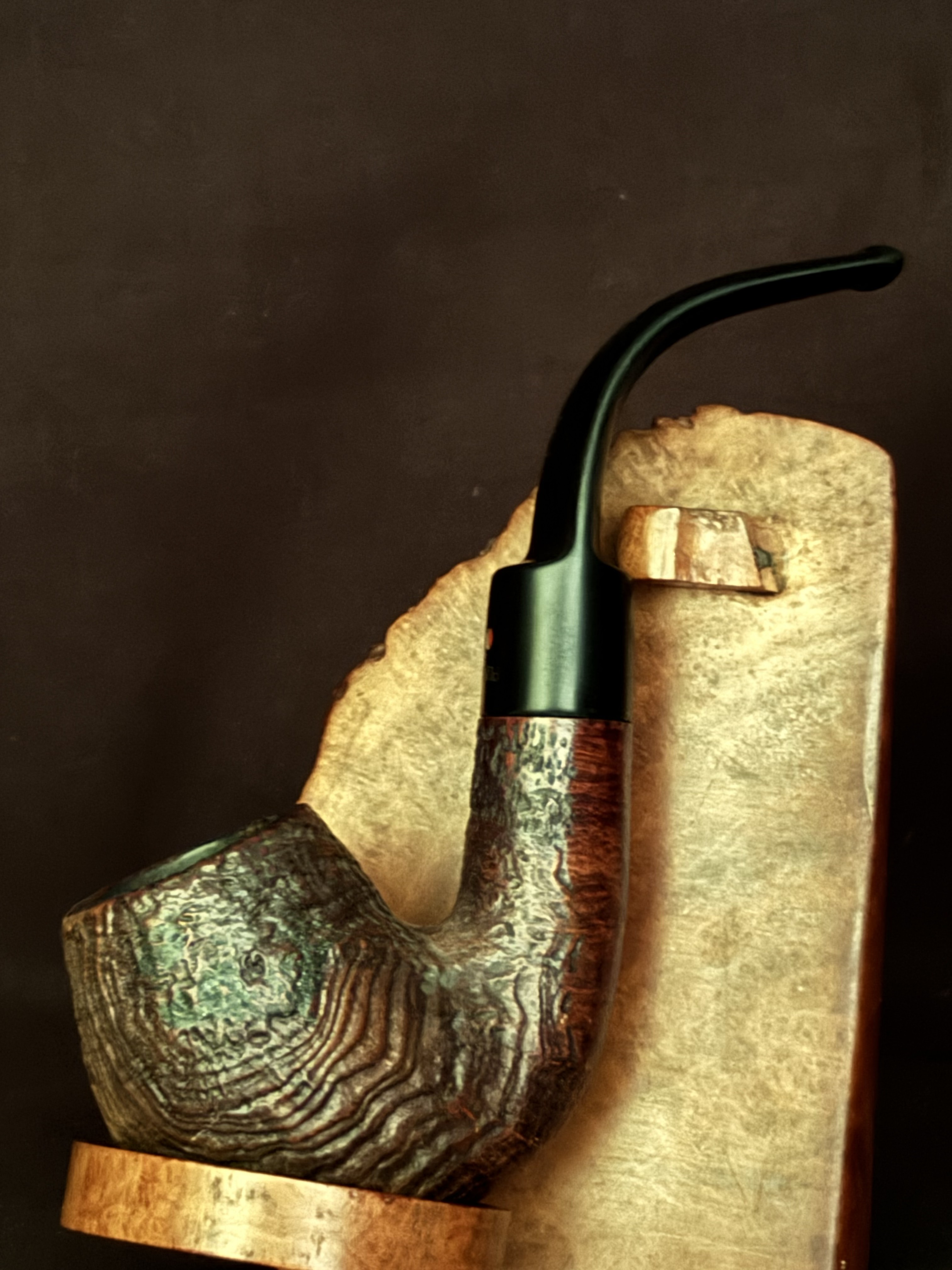
Dr. Plumb London Made Full Bent Sandblast Billiard Estate Pipe - Vulcanite Saddle Stem
$95.00
The sandblast here was cut in stages, and the seam between them is still legible under the thumb: higher on the bowl the blast runs deep and coarse, while lower down the surface re
Material
Briar
Availability
Sold
Tags
Dr Plumbsandblast pipebilliard pipeestate pipeLondon madevulcanite stemsaddle stemfishtail bitfull bent pipebriar pipetobacco pipepipe collectorno filter pipe
This piece has been sold and is no longer available.
Carefully Packaged
Authenticity Guaranteed
Free shipping over $150
About this Piece
The sandblast here was cut in stages, and the seam between them is still legible under the thumb: higher on the bowl the blast runs deep and coarse, while lower down the surface reads smooth to the touch yet still shows the ridges of the pattern beneath it. A graduated blast like this belongs to an older way of working a block, passing it through the wheel more than once to bring out grain at different depths across the same bowl.
This is a full bent billiard from Dr. Plumb, London Made, carrying that graduated sandblast finish and fitted with a thin vulcanite saddle stem cut to a fishtail bit. No filter is fitted; the bore runs straight through the stem to the tenon.
The billiard is the shape against which most others are measured: a cylindrical chamber with walls of even thickness top to bottom. Here the shank and stem sweep through a full bend, carrying the bit down at a steep angle rather than the shallow tilt of a bent apple or the squared shank of a bulldog. A full bent billiard sits low in the hand and lower still in a rack. It is built to be gripped in the teeth through a long smoke, the bend keeping the bowl's weight close to the jaw instead of hanging off the end of a straight shank.
The stem is a saddle, stepped down from the shank's diameter rather than tapering into it, and cut with a fishtail slot at the bit: two vulcanite tines flaring from a central spine instead of a single round hole. With no filter fitted, the airway runs the full length of the stem unbroken, the configuration standard before 9mm and other filter systems became common in export briar.
Finish and grain: see the photographs. The graduated blast described above is the one finish detail we can speak to with certainty from the seller's inspection; colour and grain character are best judged from the images.
THE MARKS
- DR. PLUMB stamp
- LONDON MADE stamp
Condition: not yet graded - refer to the photographs; a detailed condition report is available on request.
THE MEASUREMENTS
Length 131mm (5.2") - bowl height 48mm (1.9") - bowl width 38mm (1.5") - bowl depth 40mm (1.6") - chamber diameter 20mm (0.8") - weight 1.55 oz
Ships from the Faridunhill / Pipe Collectors Encyclopedia archive. Worldwide shipping and professional sanitation on every estate pipe.
SKU: SKU-249