Loading
Estate Pipes
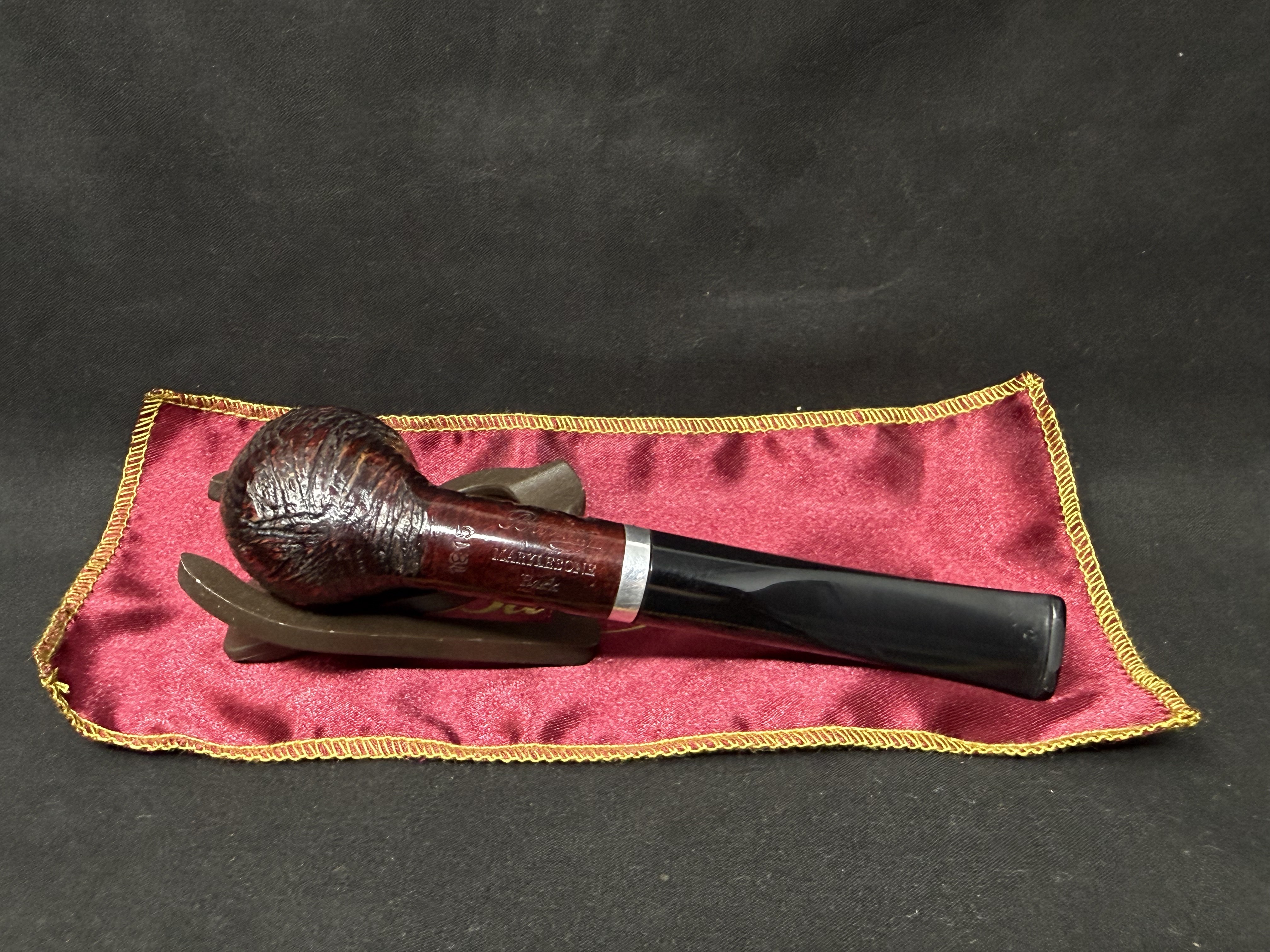
Barling Marylebone Bark 1815 9mm Estate Pipe - English Briar
$295.00
Material
Briar
Availability
Only 1 left
Tags
BarlingMarylebone1815estate pipeEnglish briarbark finish9mm filtervintage pipeLondon pipebilliardtobacco pipecollectormid-century
1
Carefully Packaged
Authenticity Guaranteed
Free shipping over $150
About this Piece
Welcome to Pipe Collectors Encyclopedia, your premier destination for museum-quality estate pipes with comprehensive historical and technical documentation.
IDENTIFICATION
This is a Barling Marylebone Bark, catalogued as shape 1815, fitted with a 9mm filter system. The pipe dates to the mid-20th century English estate period. Marylebone Bark is among the most recognizable finishes in the Barling line, distinguished by its deliberate rustication applied to commercial-grade briar. The 1815 is a utility shape in the Barling catalog, proportioned for daily smoking and value-conscious collectors.
HISTORICAL CONTEXT
Barling of London was founded in the 1680s and operated continuously through the 20th century, making it one of the oldest pipe manufactories in England. The house became known for three things: consistency of engineering, affordable briar for working-class smokers, and the Bark finish, which emerged in the 1920s as a branded alternative to smooth finishes. Bark rustication was a practical choice: it masked grain variations and tool marks on lower-grade briar, disguising flaws while creating visual texture. Unlike hand-carved rustication, Bark was applied mechanically, allowing Barling to produce volume without sacrificing character.
The Marylebone line sits in the middle tier of the Barling catalog. Named for the London district, Marylebone pipes were marketed as solid, unadorned smokers for pipe tobacco enthusiasts who valued function over decoration. The 1815 shape number places it within a range of compact, accessible bowls ideal for Virginia and Virginia-Perique blends. Barling pipes of this era are collected for their honest construction, modest price point in the estate market, and the distinctive Bark finish, which has aged into a warm, authentic patina that appeals to collectors who prefer pipes with history and character over unmarred surfaces.
The 9mm filter system indicates this pipe was made for compatibility with modern pipe filters, a feature that dates many Barlings to the post-1970s manufacturing run. This practical update ensures the pipe remains smokeworthy with contemporary filtration or can be unfiltered with a simple plug.
GRADING & MARKS
- Maker's Stamp: "BARLING" (to be confirmed upon inspection)
- Model Designation: "MARYLEBONE" (to be confirmed upon inspection)
- Shape Number: 1815 (to be confirmed upon inspection)
- Filter System: 9mm (mechanical compatibility)
- Country of Origin: ENGLAND (to be confirmed upon inspection)
- Grade/Quality Line: Standard commercial (to be confirmed upon inspection)
Barling stamps are typically struck into the shank side wall or bowl underside. The presence and clarity of stamps, along with any secondary marks, will be documented upon inspection. Grade indicators, if any, reflect Barling's internal quality sorting and may denote wood selection or finish application batches.
SHAPE ANALYSIS
The 1815 is a compact, wide-bowl billiard-adjacent form, designed for hand-held smoking with a balanced transition from bowl to shank. The shape favors a moderate chamber depth relative to bowl diameter, allowing for both quick morning smokes and longer afternoon sessions without overheating. The shank and stem are proportioned for comfort in the hand without the weight of a larger bent or acorn shape. This shape occupies the practical middle ground of the Barling catalog: not as diminutive as the smallest pipes, not as commanding as the larger shapes. It is best held horizontally or at a slight upward angle. The 1815 sits comfortably alongside other compact Barling shapes (such as the 1800 series) and represents the bread-and-butter production that defined Barling's commercial success.
BRIAR & FINISH
Barling Marylebone Bark pipes are fashioned from Mediterranean briar sourced through established trade channels. The briar selected for the Bark line is typically of moderate grade: straight grain and modest flame are acceptable because the rustication finish conceals grain variation. Bark rustication is achieved through mechanical abrasion, creating a uniform, dimpled texture across the external surface. Under direct light, the finish catches highlights from each small peak, creating visual depth without the labor of hand-carving. The finish has aged gracefully on pipes of this vintage, developing a warm patina that reflects decades of storage and occasional handling. The Bark finish is both practical and aesthetic: it hides wear and minor surface damage while lending the pipe a rustic, honest appearance that appeals to collectors who value authenticity over perfection. Over time, Bark finishes deepen in color and character, the mechanical texture becoming softer and more integrated with the wood beneath.
CONDITION REPORT
To be confirmed upon inspection. The condition assessment will document the following: overall rim condition (integrity of the pipe opening, presence of any burns, smoothness of the edge), chamber interior (carbon cake buildup, oxidation, crack lines), stem condition (clarity, tooth chatter or bite marks, oxidation or staining, fit to the shank), presence of any repairs or fills (location, size, color-matching, structural integrity), and surface finish (uniformity of the Bark texture, major dings or dents, overall cleanliness). Barling pipes of this age commonly show honest wear appropriate to their working design; condition will be reported without euphemism.
DIMENSONS
- Overall Length: to be confirmed upon inspection
- Bowl Height (rim to floor): to be confirmed upon inspection
- Chamber Diameter (top): to be confirmed upon inspection
- Chamber Depth: to be confirmed upon inspection
- Weight: to be confirmed upon inspection
- Filter System: 9mm (standard)
FINAL NOTE
Ships from the Faridunhill / Pipe Collectors Encyclopedia archive. Worldwide shipping and professional sanitation on every estate pipe.