Loading
Estate Pipes
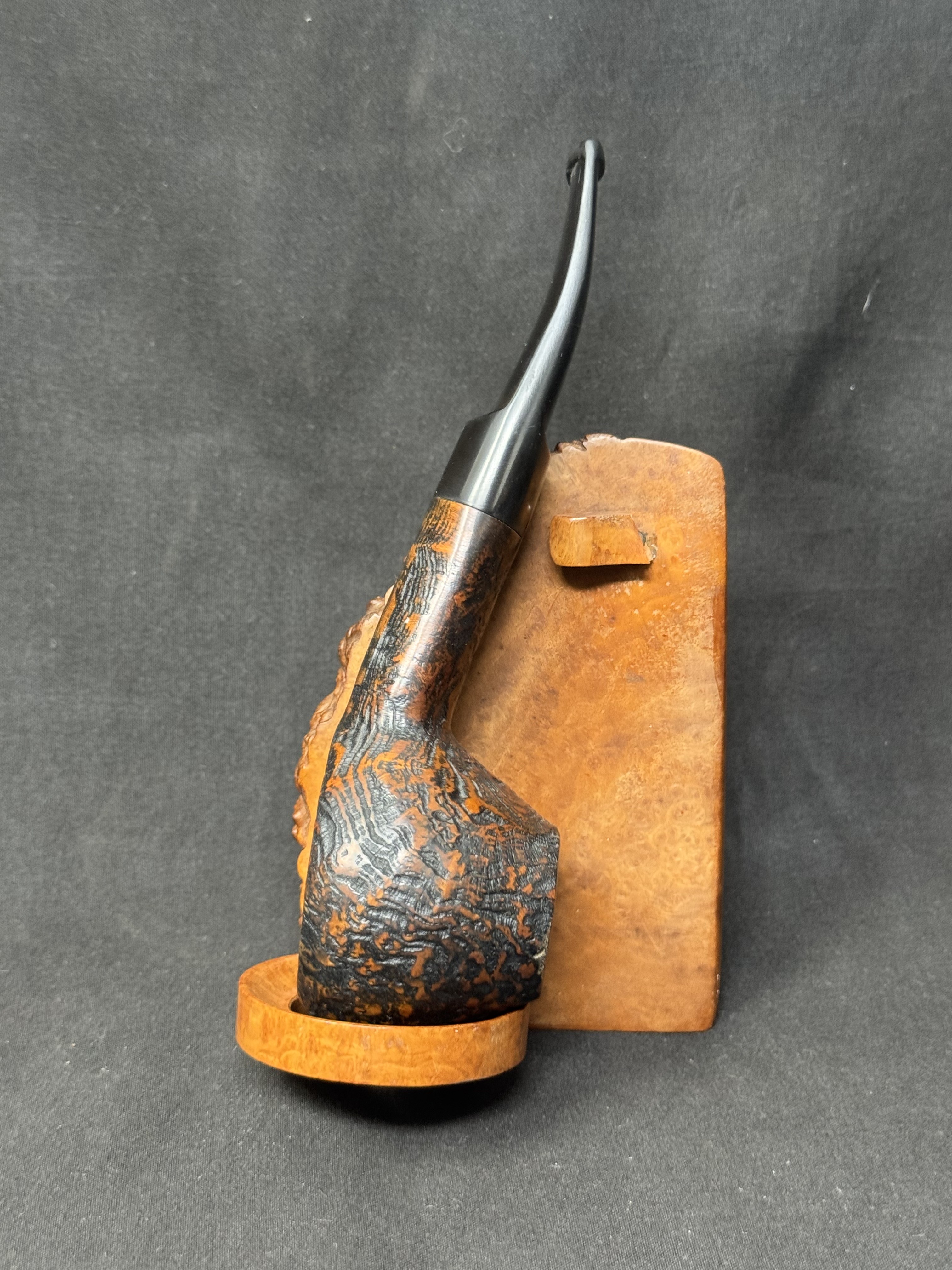
AKRA Bruyere 5778 Volcano Sandblast Straight Sitter Estate Pipe
$95.00
Material
Briar
Availability
Sold
Tags
AKRA briar pipeGerman pipeBruyere linesandblast finishvolcano shapeestate pipecollectors pipevintage briarstraight sittersmoking pipepipe restorationtobacco pipeAltenburg maker
This piece has been sold and is no longer available.
Carefully Packaged
Authenticity Guaranteed
Free shipping over $150
About this Piece
Welcome to Pipe Collectors Encyclopedia, your premier destination for museum-quality estate pipes with comprehensive historical and technical documentation.
IDENTIFICATION
This is an AKRA Bruyere model 5778, a straight sitter volcano form finished in sandblast. The pipe carries a vulcanite saddle stem with fishtail mouthpiece and 9mm chamber. AKRA (Aktiengesellschaft Rhrenwerk Altenburg) was a German pipe maker established in the early 20th century, known for solid briar work and aggressive finishes that highlighted grain and briar character. The Bruyere line represented the maker's mid-range production, positioned between entry-level and premium grades. The 5778 designation places this pipe within a catalog system typical of German exports of the mid-to-late production era. No datable marking has been verified; the pipe is presented without era assignment.
HISTORICAL CONTEXT
AKRA operated from Altenburg, Saxony, a secondary hub of German briar pipe manufacture. The company competed in the export market alongside larger makers such as Vauen, Ropp, and Stanwell, producing pipes for both domestic German consumption and international distribution, particularly to Scandinavia and Britain. The Bruyere line sat in a deliberate middle position within AKRA's portfolio: above the basic utility grades but below the hand-carved and premium-grain selections that commanded higher prices. Sandblast finishes, which require aggressive abrasion of the briar surface to expose trapped grain and create three-dimensional texture, became increasingly popular in the 1960s and onward as makers sought to differentiate their output and mask minor grain defects while simultaneously celebrating the natural briar beneath the stain. Collectors value AKRA pipes for their clean engineering, consistent chamber work, and the restrained aesthetic of German production-no overstated branding, no excessive ornamentation. The volcano shape, a squat and compact bulbous form, represents a utilitarian bowl geometry that offers substantial tobacco capacity without excessive height, ideal for a workman's or armchair pipe. Such forms are often overlooked in favor of more sculptural shapes, making them undervalued in the modern collector market.
GRADING & MARKS
The pipe bears the stamp AKRA Bruyere with model number 5778. The exact placement, font, and additional country or grade marks are to be confirmed upon inspection. German stamping conventions of the era typically included maker name, line name, model number, and country of origin (Deutschland or West Deutschland). No additional hallmarks, dot grades, or artist initials have been noted by the seller.
SHAPE ANALYSIS
The volcano is a compact, bulbous bowl form with minimal shank projection, designed to sit flat on a table or rest comfortably in the hand. The geometry features a wide, squat chamber that tapers inward slightly toward the tobacco bed, maximizing smoking duration relative to apparent size. The straight orientation and saddle stem configuration place it in the realm of utilitarian pipe forms-uncomplicated, symmetrical, and without curve or rake. This shape family shares ancestry with the tomato and the squat billiard, though its proportions are distinct: the bowl dominates the visual profile, while the stem remains relatively thin and practical rather than sculptural. The fishtail mouthpiece, a flared opening at the stem terminus, distributes moisture and allows the lips to rest across a wider surface area, a comfort feature favored in working pipes of Germanic manufacture.
BRIAR & FINISH
The pipe is fabricated from briar root stock. The finish is sandblast, achieved by abrading the briar surface with grit under pressure to create a textured, matte surface that exposes the natural grain structure beneath any stain layers. Sandblast finishes are labor-intensive, as they require careful masking and grading to avoid penetrating too deeply into the softer grain or creating irreversible surface damage. When executed well, as German makers typically achieved, the result is a three-dimensional surface that plays light and shadow across the briar, reveals grain character that would be obscured under a high-gloss finish, and ages gracefully as the briar oxidizes and deepens. The finish suits the volcano form particularly well: the bulbous bowl provides ample surface area for the texture to be appreciated, and the matte character eliminates the flat appearance that a shiny finish might impose on such a compressed shape. Over time, sandblasted briar typically develops a warm, darkened patina that enhances the dimensional quality of the carved texture.
CONDITION REPORT
The chamber interior is clear and unobstructed, with visible briar showing no cake buildup or residue. The pipe shows evidence of minimal smoking, estimated at one or fewer full sessions. No structural damage, fills, patches, or repairs have been noted. Rim, shank junction, and stem integrity are to be confirmed upon detailed inspection. The vulcanite stem may display surface oxidation or minor tooth chatter typical of estate pipes; specifics are to be confirmed upon inspection. Overall, the pipe presents as lightly used and well-preserved.
DIMENSIONS
Length overall: 146 mm / 5.8 inches
Bowl height: 38 mm / 1.5 inches
Bowl width (maximum diameter): 48 mm / 1.9 inches
Bowl depth (chamber): 34 mm / 1.4 inches
Weight: 1.90 oz
CLOSING
Ships from the Faridunhill / Pipe Collectors Encyclopedia archive. Worldwide shipping and professional sanitation on every estate pipe.
SKU: SKU-175